PlayStation 6
a new era of gaming
The complete guide to PS6. Track the release date, price, AMD Zen 6 specs, exclusive games and every verified rumor about Sony's next console.
Time until expected PS6 reveal:
What is PlayStation 6?
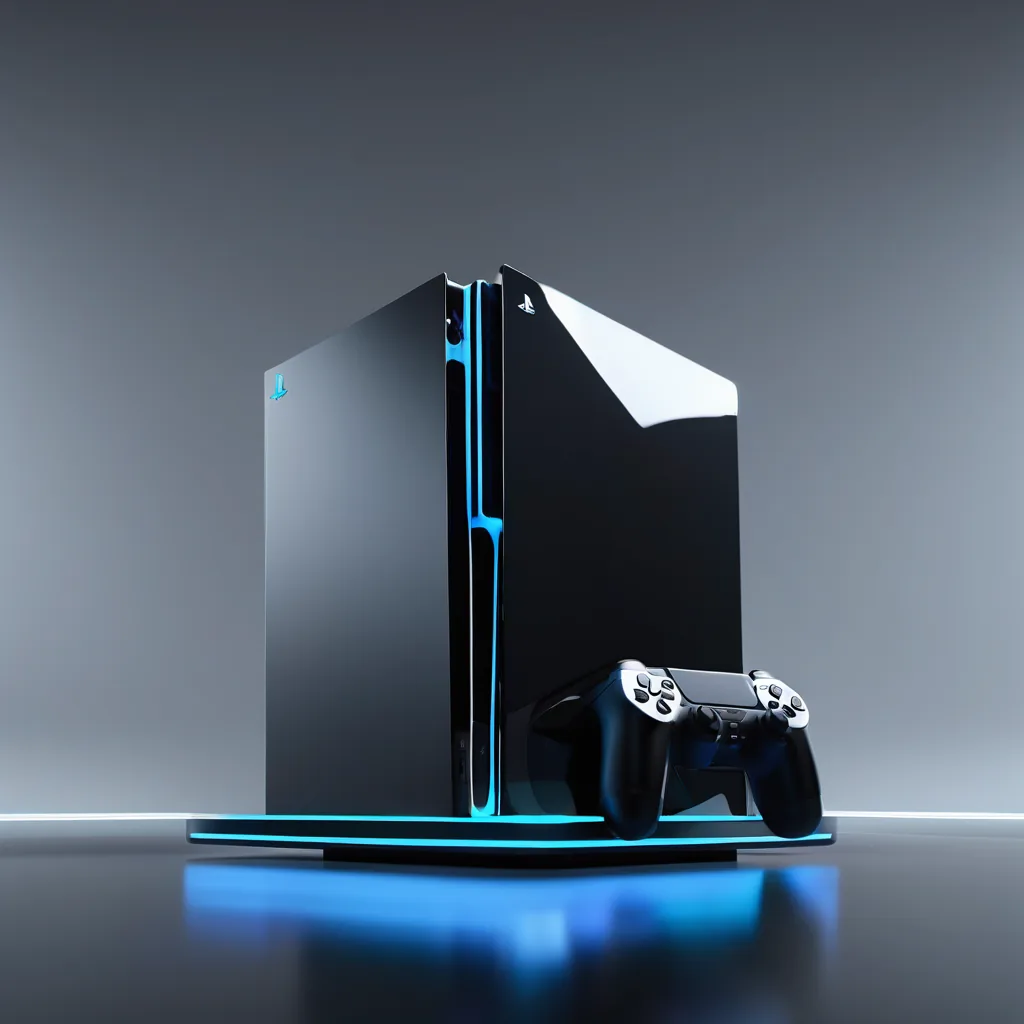
PlayStation 6 (PS6) is the upcoming ninth-generation gaming console from Sony Interactive Entertainment. It follows the successful PlayStation 5 and delivers the biggest generational leap in a decade thanks to AMD Zen 6 architecture, RDNA 5 graphics, and a dedicated AI chip for PSSR upscaling.
Sony has not officially confirmed PS6 yet, but leaked documents, patents, and analyst commentary already reveal a lot. Launch is expected in the 2027–2028 window, with the latest leaks pointing to 2027. RenderSix tracks every verified leak daily and brings them together in one international hub that gives you the full picture before Sony makes a move.
PS6 in numbers
Quick overview of the most important PlayStation 6 specs
When will PlayStation 6 be released?
Sony has historically followed a seven-year life cycle. PS3 launched in November 2006, PS4 in November 2013, and PS5 in November 2020. By that pattern, PlayStation 6 should arrive in the 2027–2028 window. November remains the traditional launch month to catch the holiday season.
Sony has not officially confirmed a date. At the May 2026 earnings call, CEO Hiroki Totoki said the PS6 launch date and price are not decided. The main reason is the memory price crisis. GDDR7 module prices have surged because AI data centers absorbed most capacity and manufacturers Samsung, SK Hynix, and Micron are shifting production lines. Sony is even considering a change to its business model instead of simply raising the price.
The latest leaks (KeplerL2, 2026) still claim PS6 is on track for 2027 and dismiss delays to 2028 or 2029. The most realistic scenario is a late-2027 launch, with a real risk of slipping to 2028 if the memory crisis persists.
How much will PS6 cost?
The estimated PlayStation 6 launch price starts at $749 for the Digital Edition. The Standard Edition with disc drive will be around $849, and the Premium launch edition is expected at $969.
The main reason for the higher price is extremely expensive GDDR7 memory. Historically Sony sold consoles at a loss or minimal profit and made money on PS Plus, games, and services. With these component prices, that will no longer be possible. Some analyst reports mentioned Sony would need to sell PS6 for $799 just to break even, and newer estimates push BOM to $960 per unit.
PS5 launched at $499 in 2020. PS5 Pro in 2024 raised the bar to $699. The trend is clear: PS6 could be the most expensive PlayStation launch ever. Details in our article why PS6 is getting more expensive.
PS6 specs: what's under the hood?
PlayStation 6 will be powered by an AMD Zen 6 processor with eight cores and sixteen threads, built on TSMC's 3nm process. It's a two-generation leap over PS5 (which uses Zen 2 on 7nm). Result: significantly higher performance per watt and support for AI inference instructions directly on the CPU.
The AMD RDNA 5 GPU will offer 52–54 Compute Units at 2.6–3.0 GHz, delivering 34–40 TFLOPS — comparable to PS5 Pro at baseline and three times the original PS5. Add 30 GB of GDDR7 memory with 540–640 GB/s bandwidth. PS5 has only 16 GB GDDR6 at 448 GB/s, so PS6 roughly doubles the memory subsystem.
Modern games are hungry for memory. PS5 at 16 GB was sometimes tight, forcing developers to compromise on textures and streaming. At 30 GB GDDR7, most of those constraints disappear.
PSSR, path tracing and Gen 5 SSD
With PS5 Pro Sony introduced its own AI upscaling tech PSSR (PlayStation Spectral Super Resolution) — the answer to Nvidia DLSS and AMD FSR. On PS6 it gets a dedicated NPU for machine learning. Upscaling from 1440p to 8K, AI-generated intermediate frames for higher FPS, and artifact removal. Practical impact: a game running natively at 4K 60 FPS with PSSR will look like 8K and feel like 120 FPS.
PS5 had ray tracing, but with a compromise. Games had to choose between ray tracing at 30 FPS or without it at 60 FPS. PS6 removes that compromise. Behind it is Project Amethyst, the official Sony–AMD partnership (October 2025) bringing dedicated Radiance Cores for path tracing and Neural Arrays for AI compute. Full path tracing at 60 FPS, realistic reflections on any surface (water, metal, wet asphalt) and dynamic soft shadows — all during gameplay. Path tracing simulates not just the first bounce of light but every subsequent bounce until the ray fades. Result is global illumination indistinguishable from reality.
PS5's SSD at 5.5 GB/s nearly eliminated loading screens. PS6 goes further with a Gen5 NVMe SSD: 12–16 GB/s. That enables open worlds where every detail of every corner is loaded before you get there. No foggy textures, no geometry pop-in. For games like GTA 6 or the next Elder Scrolls, this isn't a detail — it's the foundation of world presentation.
Games for PlayStation 6
The PS6 launch window will belong to heavy hitters. Expect GTA 6 in an upgraded version with full ray tracing, Gran Turismo 8 from Polyphony Digital, Horizon 3 from Guerrilla Games, the next God of War from Santa Monica Studio and Spider-Man 3 from Insomniac Games. Sony also traditionally debuts a brand-new IP with each generation, as it did with Bloodborne, Ghost of Tsushima, or Astro Bot.
When developers of large open worlds talk (anonymously) about PS6 dev kits, one thing repeats: finally enough RAM. PS5 with 16 GB forced tough choices — lower textures or a smaller streaming world. At 30 GB most of those compromises disappear. PS6 dev kits reached selected studios as early as 2023.
DualSense 2 and PSVR3
DualSense for PS5 changed how games feel thanks to haptics and adaptive triggers. Sony patented a DualSense 2 with one controversial change: instead of physical X, O, triangle, and square buttons, capacitive touch surfaces. Same position, no mechanical click. Benefit: longer life, quieter controller, more sensitive response. A patent doesn't mean a product, but the direction is clear.
Virtual reality gets a new headset PSVR3. Expect 4K OLED per eye (PSVR2 had 2K), 120 Hz refresh rate, wireless via Wi-Fi 7 and AI-assisted foveated rendering. PS6's power will dramatically reduce VR gaming constraints. VR will finally look like a full console title, not a compromise.
Project Canis: Sony goes handheld
Sony is working on a portable console codenamed Project Canis. It should launch alongside PS6 or shortly after. Eight-inch OLED display, likely 120 Hz and 1080p/1440p. Under the hood AMD Zen 6c with RDNA 5 graphics in a 16 Compute Unit config, 24 GB LPDDR5X, and estimated GPU power of 5–8 TFLOPS.
Design: detachable controllers on the sides of the display, tabletop play and TV docking via a dock. Yes, it sounds like Switch. But Sony is responding to the fact that Nintendo sold over 140 million Switch units — more than PS5. Portable gaming is a huge market Sony has left unanswered.
Key difference from Vita or PSP: Project Canis will play full PS4, PS5, and PS6 games. Not special handheld versions, not cloud streaming — native execution. PSSR will help render games designed for the big console on smaller hardware. Price estimates vary: older leaks said $399–$499, newer leaks around $650. Don't confuse with PlayStation Portal, which only streams games from PS5.
Backward compatibility and cloud gaming
PS5 games will run on PS6 at 100%, most of them faster and at higher resolution. PS4 games too — PS5 handled it smoothly and PS6 inherits that. According to Reuters, Sony chose to continue with AMD and turned down Intel's offer precisely to avoid risking backward compatibility. The shared x86_64 architecture and AMD graphics instructions guarantee seamless launch of thousands of existing games. PS3 and older titles expand via PlayStation Classics and PS Plus Premium.
Sony invests in cloud via PlayStation Plus Premium and Azure partnership. For the PS6 era this means streaming PS6 games to older hardware, instant game starts without downloads, and cross-save between console, PC, and mobile. In cities with fiber internet, cloud gaming is a full alternative in 2026. Network infrastructure keeps improving and latency for cloud gaming has dropped below 20 ms in most European cities.
PS6 vs PS5: Is it worth waiting?
The gap between PS5 and PS6 will be larger than between any two previous generations. Triple raster performance, up to 12× ray tracing, double the memory, and full 8K gaming via PSSR. If you're considering a PS5 Pro, it's worth comparing what you get today and what's coming in two years.
Ray tracing on PS6 will be up to 12× faster than on the original PS5. That doesn't just mean nicer reflections. It means games can work with real-time lighting without compromises between quality and frame rate. And the CPU shift from 7nm to 3nm means a massive performance-per-watt improvement.
Competition: Xbox Next and Nintendo
Xbox Next is expected in a similar window to PS6. Microsoft bet on Game Pass and multiplatform reach and has a real lead there. Sony responds by strengthening exclusives — reports suggest PS6 will have more first-party exclusives than ever.
Nintendo Switch 2 launched in 2025. Competing with PS6 on raw power isn't Nintendo's goal — Mario, Zelda, and Pokémon simply don't need it. But Project Canis is a direct answer to Switch; Sony doesn't want portable gaming to remain Nintendo-only. Valve also entered with the new Steam Machine revealed in late 2025: a console-style PC with SteamOS and an AMD chip for the living room. It's another pressure on consoles from the PC world. PC remains ahead of consoles on performance, but a high-end rig matching PS6 costs $2,000–$3,000. PS6 at $749–$969 still makes sense, especially for those who want PlayStation exclusives on day one.
Latest from the blog
PS6 Memory Crisis: How GDDR7 Shortage Pushed BOM to $960
How GDDR7 and DRAM prices driven by AI data centers pushed PS6 bill of materials to $960, what it means for the $749-$969 price and 2027 vs 2028 launch.

Project Amethyst: Sony and AMD's Official RDNA 5 Architecture for PS6
What Project Amethyst really is: Sony and AMD official long-term collaboration for PS6 RDNA 5, with Radiance Cores, Neural Arrays and Universal Compression.
PS6 Handheld (Project Canis): Specs, Price and Release Date
Leaked PS6 handheld Project Canis specs, price and target 2027 launch. How it differs from PlayStation Portal and what 16 RDNA 5 compute units at 24GB LPDDR5X mean.
Frequently asked questions about PS6
Answers to the most common questions people search about PlayStation 6